

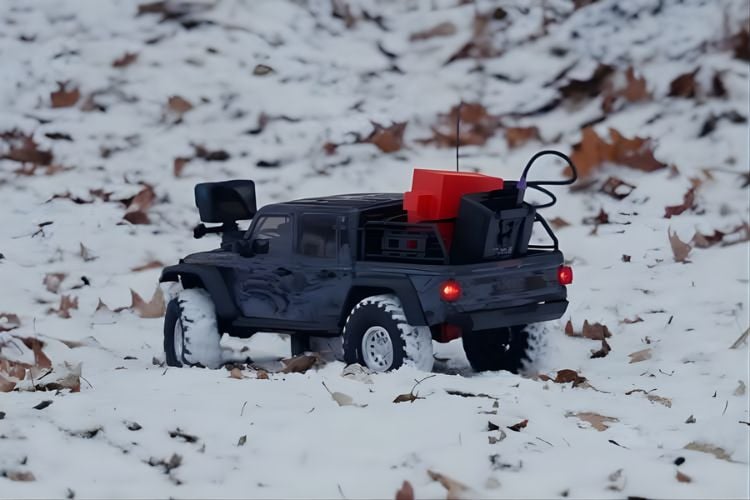
YouTuber Coding with Lewis recently demonstrated how an AI model can be given a physical body by converting an RC car into a fully autonomous wilderness explorer. Using Claude 3.5 Opus as the decision-making engine and a Raspberry Pi 5 as the onboard controller, the project bridges digital intelligence with real-world robotics, allowing the vehicle to navigate snowy forest terrain completely on its own.
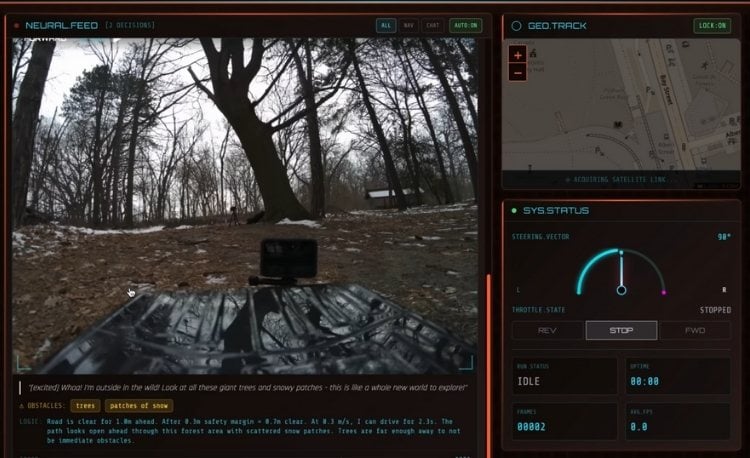
The robot is built on a rugged RC chassis and equipped with a 16MP wide-angle camera mounted on a 3D-printed servo bracket, enabling side-to-side vision. A 4G HAT provides remote connectivity, while a custom ESC setup lets the Raspberry Pi directly control steering and throttle. Since the AI cannot process continuous video, Lewis implemented a clever “Journey Grid” system that captures multiple frames per movement and combines them into a single image for analysis. Depth estimation is handled using Apple Depth Pro, helping the AI decide when to advance, turn, or reverse.
Tested in freezing -4 °C conditions, the robot made over 900 autonomous decisions while navigating snow, branches, and dense brush. When stuck, it methodically tried alternative paths, logging moments of excitement as it discovered clearings. What began as a hardware experiment evolved into a philosophical one, highlighting how giving AI a physical presence enables creative, unpredictable interaction with the natural world

Add a comment
No account needed. Your comment appears once a moderator has reviewed it.