
“The time is right for Electric Cars – In fact, the time is critical” - Carlos Ghosn CEO, Renault
With the whole world focusing on renewable energy and sustainability, electric cars are widely accepted as the cars of our future. This section is completely dedicated to Electric vehicles, it contains basic electric vehicle projects, latest news, and articles on the important elements of an electric vehicle like Batteries, Battery Management System (BMS), Wireless Charging, Charging Stations etc.. It also provides latest news on Automobile components to keep the readers updated on recent technology trends in Electric Vehicles.

Tata Power Renewable Energy Limited and Tivolt Electric Vehicles have signed a Memorandum of Understanding (MoU) to develop a strong charging infrastructure for commercial electric vehicles across India. This partnership combines Tata Power’s expertise in renewable energy and charging solutions with Tivolt’s expanding network of small electric commercial vehicles.…
A critical question arises as the automobile industry gradually shifts towards eco-friendly options and sustainable solutions: How safe and time-efficient are these utilities in our daily lives?
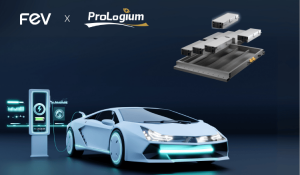
FEV, a German based company, and ProLogium, a Taiwanese based company, have collaborated to develop LLCB technology (Large-Footprint Lithium…
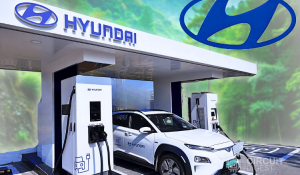
Hyundai aims to establish 600 EV fast charging stations across India by 2030, with 50 stations operational by December 2024. In Tamil Nadu, 100 stations will be set up by 2027, including 10 stations operational by 2024.
Hyundai Motor India Ltd (HMIL) has announced a big plan to set up 600 EV fast charging stations across India by…
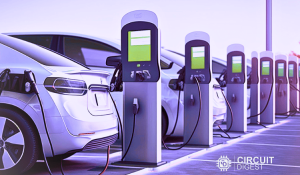
Delhi recently added 25 new EV charging stations, increasing the total to over 2,400, including 78 government-operated ones. Currently, 12% of new vehicle registrations in the city are electric. The Delhi government aims to raise this figure to 25% by 2025, further promoting green mobility and reducing pollution.
In a major step…

British International Investment commits $33.5M to India’s EV sector, including $15M for Everest Fleet, $15M for TI Clean Mobility and $3.5M for Vecmocon, totaling $328M in overall commitments in India EV Sector.
British International Investment (BII), the UK’s development finance institution and impact investor, has announced $33.5 million in funding to…

Delhi EV policy, buyers of electric two-wheelers will get ₹5000 per kWh of battery capacity as a subsidy, up to a maximum of ₹30000. For electric three-wheelers, a flat subsidy of ₹30000 is offered, regardless of the vehicle’s battery size or price.
The Delhi government has extended its Electric Vehicle (EV) policy till March 31,…

Foxconn, a global leader in electronics manufacturing, is in discussions with the Tamil Nadu government to establish a Battery Energy Storage System (BESS) facility in the state. The Tamil Nadu government has offered approximately 200 acres of land for the proposed project, located near Manalur in the Tiruvallur district. This move is part of Foxconn's broader…

India’s EV sector requires an investment of $20-30 billion to boost charging infrastructure. The PM E-DRIVE Scheme, with a ₹10900 crore allocation, aims to support over 28 lakh electric vehicles and 88500 charging sites.
India’s electric vehicle (EV) sector requires an investment of $20-30 billion to expand its charging…

The Morigaon semiconductor plant by TSAT, with a Rs. 27000 crore investment, will produce 48 million chips daily, creates around 28000 job opportunities and enhance India’s global semiconductor competitiveness.
India’s vision of becoming a global leader in semiconductor manufacturing is gaining momentum with the establishment of a…

Ford’s expanded vision for the Chennai facility hints at long-term investment in India, as the plant will create job opportunity, skill development and potential local market introduction once the demand for hybrids and EVs strengthens in India.
Ford is set to make a fresh start at its Chennai manufacturing plant, aiming to balance hybrid, electric and internal combustion…

India’s EV industry has substantial growth potential, with EVs currently comprising just 2% of passenger vehicles sold. Market forecasts predict a rise to 15-20% by 2030. However, S&P Global Mobility recently adjusted its forecast for EV penetration to 19% from the earlier 22% due to slower-than-expected adoption.
…

Electric vehicle battery prices are likely to decline by nearly 50% by 2026, driven by technological advancements and falling metal costs. This significant reduction could make the overall cost of owning an EV comparable to that of petrol or diesel-powered cars.
Electric vehicle (EV) battery prices are expected to fall by almost 50% by 2026,…