
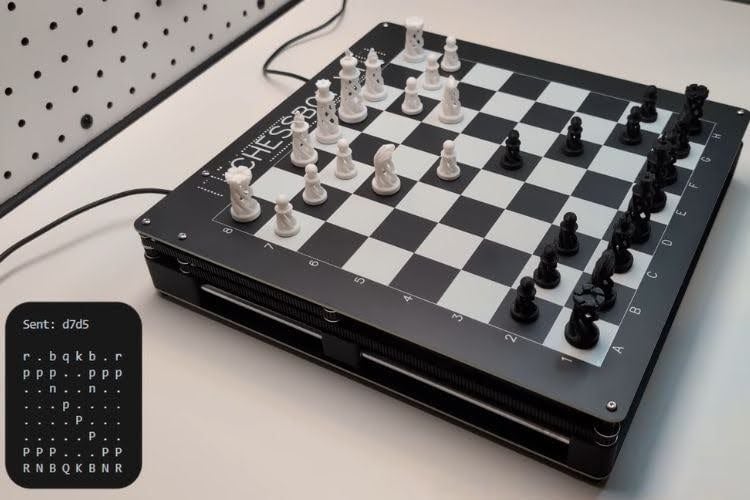
A creative maker has developed an impressive self-playing chessboard that can automatically move pieces using magnets and detect their positions. The board is equipped with magnetic sensors beneath each square, while each chess piece has a small magnet on its base, allowing the system to precisely track every piece. An ESP32 microcontroller is part of the setup, handling some hardware communication, but the main control and decision-making are handled externally, ensuring smooth gameplay.
The movement system is equally clever. Below the PCB board, the creator installed motors and electromagnets that work together to physically move the chess pieces around. When it's the robot's turn, the electromagnets activate and attract the magnets on the bottom of the pieces, sliding them smoothly from square to square. To enable intelligent chess play, the project uses Stockfish, a free open-source chess engine that decides the robot’s moves. Python programming connects the ESP32, sensors, and the Stockfish engine, ensuring smooth coordination and seamless gameplay.
This project demonstrates how modern electronics can bring traditional games to life in new ways. By combining a custom PCB design, magnetic sensors, motors, Python programming, and open-source software, the creator built something that feels magical yet uses accessible technology. While the builder acknowledges there are still some improvements to be made to perfect the system, it's already an impressive achievement that showcases what's possible with innovative maker projects. It's an excellent example of how programming, electronics, and mechanical engineering can blend together to create an engaging chess opponent you can play against on a real physical board.