

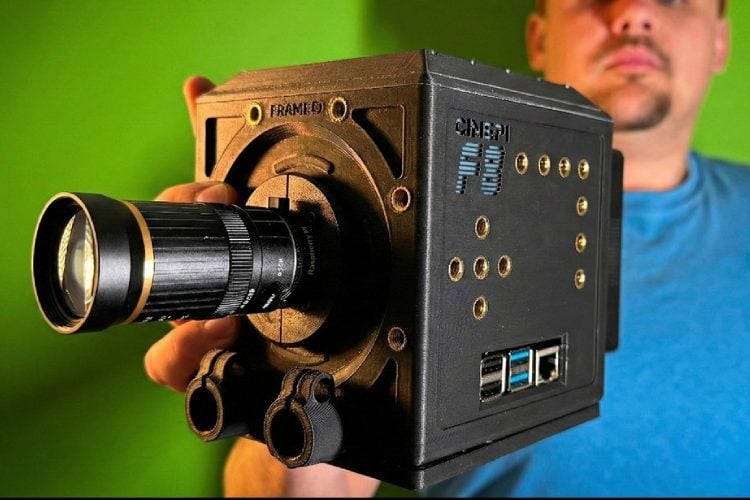
When it comes to filmmaking, cinema cameras are often one of the most expensive and unavoidable pieces of equipment. This reality has led many independent creators and engineers to explore lower-cost alternatives, including open-source and DIY camera platforms. In a recent project, Matthew Trahan documented the process of building a compact cinema-style camera using the CinePi software stack and a custom 3D-printed enclosure known as Frame8, demonstrating how readily available hardware can be assembled into a functional camera system.
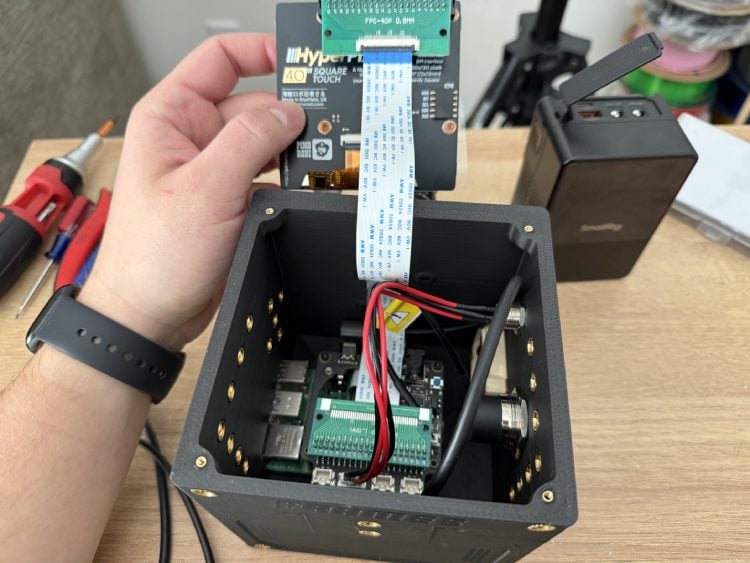
The build is based on a Raspberry Pi 5 paired with the Raspberry Pi High Quality camera module, along with a small touchscreen for local control, a battery pack, and standard camera accessories such as a C-mount lens. These components are housed in the Frame8 enclosure, which was designed specifically for CinePi-based builds and can be produced using consumer-grade 3D printers. The accompanying GitHub documentation provides a detailed parts list, assembly steps, and configuration guidance, making the project accessible to users with basic experience in electronics assembly and mechanical integration. CinePi provides many of the software features expected from a dedicated digital camera, including manual control over exposure parameters, recording modes, and monitoring options. This highlights how much of modern camera functionality is now handled in software, particularly when paired with general-purpose computing platforms like the Raspberry Pi. The open-source nature of the software also allows users to inspect and modify the camera pipeline, which can be useful for experimentation and custom workflows.
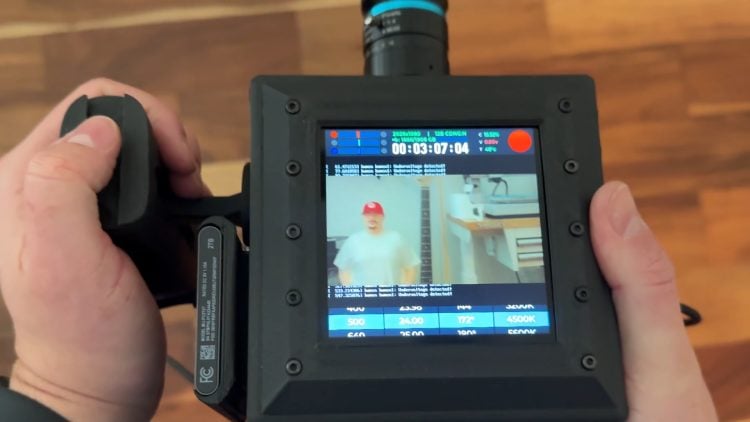
In practical terms, the performance of the system is shaped by the limits of the underlying hardware. The Raspberry Pi High Quality camera module uses a relatively small image sensor compared to professional cinema cameras, which affects low-light performance and dynamic range. While the resulting footage can be suitable for online content, testing, and learning about digital cinematography workflows, it does not aim to match the output of dedicated professional camera systems. As a DIY project, the build serves primarily as a learning platform rather than a replacement for commercial cinema cameras. It provides a clear, hands-on way to explore camera hardware, imaging pipelines, and open-source video tools within a constrained budget.

Add a comment
No account needed. Your comment appears once a moderator has reviewed it.