

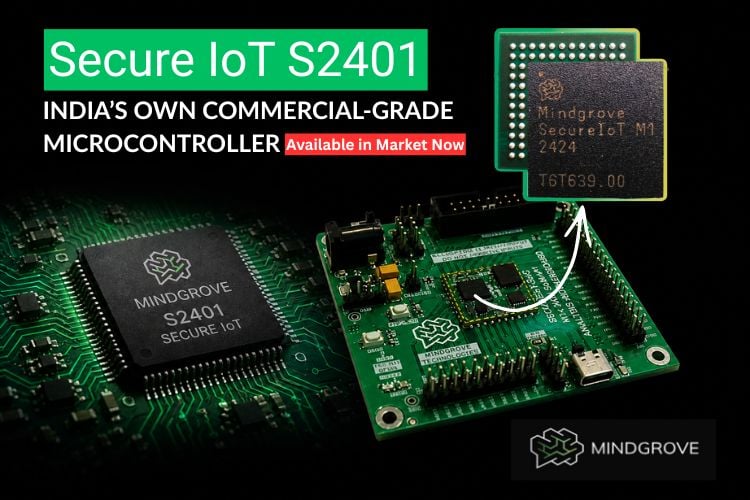
It’s something we’ve been hearing for years, India building its own microcontroller. But most of the time, those conversations stayed within labs, government schemes, or early prototypes. What’s been missing is a product that actually makes its way into the hands of developers and into real-world applications.
At Electronica 2026, I had the chance to meet Shashwat, CEO of Mindgrove, and get a closer look at what they’ve been working on. Their new chip, the S2401 Secure IoT SoC, feels like one of those moments where things are finally started to move from concept to product.
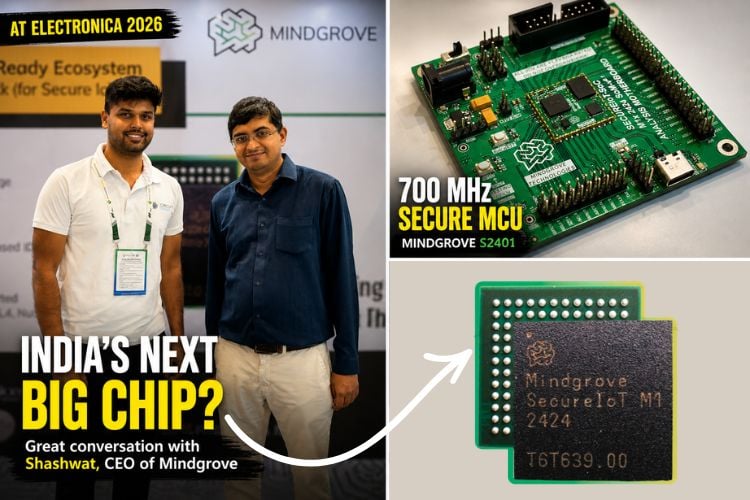
The S2401 is positioned as a high-performance microcontroller built on a RISC-V architecture, specifically the Shakti C-class core. What immediately stands out is the performance it runs at up to 700 MHz, which already places it at the very top end of what we typically expect from microcontrollers. In fact, it starts to blur the line between a traditional MCU and a microprocessor, while still retaining the simplicity and efficiency of an embedded system.
But performance alone doesn’t define this chip. One of the key design directions here is security. The S2401 integrates a full hardware security complex, including AES-256, RSA-2048, SHA-256, a true random number generator, one-time programmable memory, and physical memory protection. These aren’t features you usually associate with entry-level or even mid-range MCUs, and it clearly shows the kind of applications this chip is targeting.
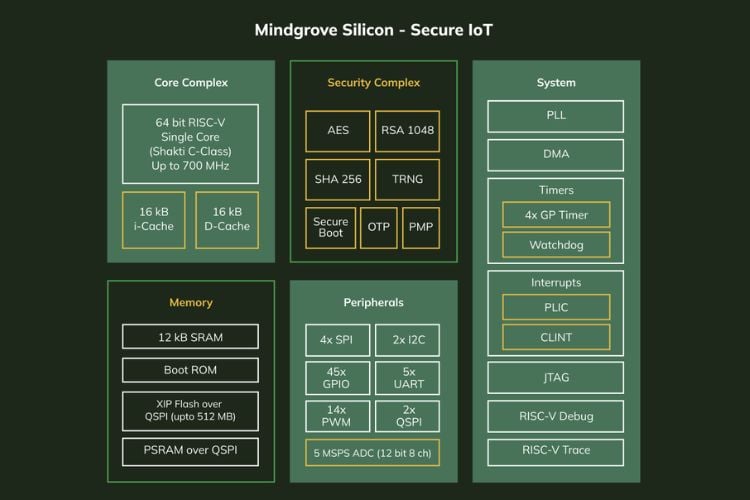
What makes it more practical is how much functionality has been consolidated into a single platform. From the material shared by Mindgrove, the S2401 is designed to handle metrology, communication, and security within the same microcontroller, reducing the need for multiple chips in applications like smart meters. This kind of integration not only simplifies system design but also helps reduce overall BOM cost.
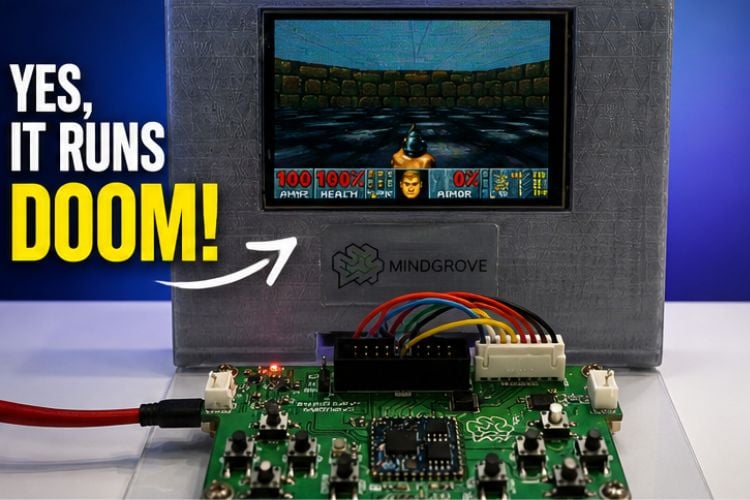
During the demo, instead of just walking through specifications, they showed something more relatable, running DOOM directly on the microcontroller. It’s a familiar benchmark in the embedded world, but seeing it run smoothly on a chip like this gives a very clear indication of the compute headroom available. It’s not just powerful on paper; it’s capable in practice.
Another important aspect is the ecosystem around the chip. Mindgrove isn’t just releasing silicon they’re building a usable platform. The S2401 comes with a full development stack including board support packages, SDKs, and RTOS support such as FreeRTOS, Zephyr, seL4, and NuttX. There is also IDE support and dedicated evaluation hardware, which makes it much easier for developers to start building without spending weeks just setting up the environment.
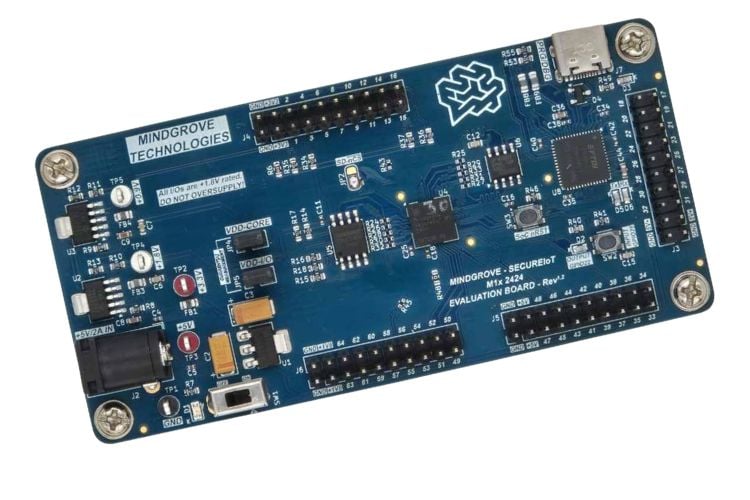
What makes all of this even more interesting is the pricing direction. Mindgrove is aiming to make their S2401 Evaluation boards available at an entry point below ₹1000 and you can join the waitlist today to get your evaluation board. For a chip operating at this level of performance and integration, that’s a strong move toward accessibility, especially for developers and startups. Also I for one am personally impressed by the detailed user manual and documentation and it got me excited to try this board when it becomes available for the masses, might even post a getting started tutorial and detailed review later.
Walking away from the conversation, what stood out wasn’t just the specifications or the demo it was the fact that this is no longer just an idea. It’s a product that’s ready to be used, tested, and built upon.
We’ve been talking about what it takes to build a chip in India for a long time. Now, we’re starting to see those efforts turn into something tangible. And the S2401 might just be one of those important steps forward.