
Shunt Resistors

|
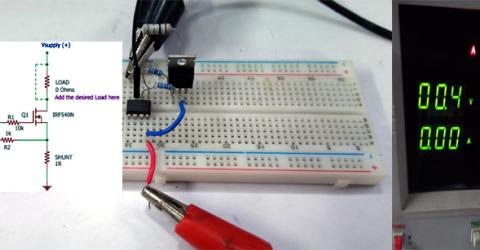
Design a Simple Constant Current Sink Circuit using Op-Amp Current Source and Current sink are two major terms used in electronics design, these two terms dictate how much current can leave or enter a terminal. For example, the sink and source current of a typical 8051 Microcontroller digital output pin is 1.6mA and 60uA respectively. Meaning the pin can deliver (source) up to 60uA when made High and can receive (sink) up to 1.6mA… |
|
Design a Voltage Controlled Current Source Circuit using Op-Amp In a voltage-controlled current source circuit, as the name implies, a small amount of voltage across the input will proportionally control the current flow across the output loads. This current source circuit using an op amp is commonly used in electronics to drive current-controlled devices like BJT, SCR, etc. We know that in a BJT, the current flowing through the base of… |

|
How to Measure Current with an Oscilloscope Measuring current is a simple task – all you need to do is hook up a multimeter to the circuit you want to measure and the meter gives you a clean value to use. Sometimes you can’t really ‘open up’ the circuit to put a multimeter in series with what you want to measure. This is solved quite simply too – you just need to measure the voltage across a known resistance in the… |
|
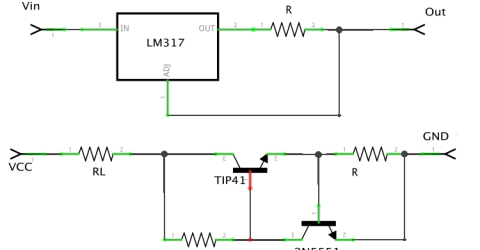
Current Regulators: Construction, Working and Design Types Just like situations in which we need to regulate the voltage in our designs, there are scenarios where we need to regulate the current that’s being supplied to a particular part of our circuit. Unlike transforming (changing from one voltage level to another), which is usually one of the major reasons for voltage regulation, current regulation is usually about keeping the… |

|
Current Sensing Techniques using Different Current Sensors Current is a very critical factor in Electronics or Electrical Engineering. In electronics, current can have a bandwidth from few nano-amperes to hundreds of amperes. This range can be much wider in Electrical domain typically to several thousand amperes, especially in Power Grids. There are different methods to sense and measure current inside a circuit or a conductor. In… |

|
Low Resistance Shunt Resistors With NiCr Resistive Element and Unique Termination Design Vishay Intertechnology released new series of Power Metal Strip shunt resistors available with two sense pins and offers low resistance down to 100 μΩ and power rating to just 36W which increase accuracy and lower costs. The newly launched WSBS8518…34 and WSBS8518…35 comes in a solid metal nickel-chrome alloy resistive element with a calibration notch and boot design… |

|
WSBS Power Metal Strip® Battery Shunt Resistors in 5216 Size Increase Accuracy, Lower Costs, and Provide Improved Corrosion Protection Vishay Intertechnology introduced the new WSBS5216 and WSBS5216...14 12W Power Metal Strip® battery shunt resistors in the compact 5216 case size. With extremely low resistance of 100 µΩ, the Vishay Dale AEC-Q200 qualified devices increase accuracy and lower costs compared with Hall Effect current sensing solutions, while the optional Sn… |
