
robotics
|
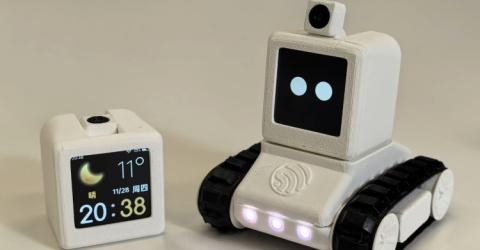
Meet ESP-SparkBot: An Open Source AI-Powered Desktop Companion ESP-SparkBot is a compact AI-powered robot built on the ESP32-S3, offering voice interaction, image recognition, and multimedia capabilities. Despite its small size, it integrates a wide range of features, including an AI assistant for conversations, weather updates, and music playback. Users can interact with it through touch sensors or voice commands, allowing for a seamless experience. The… |

|
TRON 1: A Smart Biped Robot Making Advanced Robotics More Accessible LimX Dynamics, a robotics company focused on innovation, has just introduced TRON 1, a biped robot that’s changing the game with its multi-modal design. This next-generation multi-modal robot can adapt to different terrains with its innovative "Three-In-One" modular design. That means it can walk, balance, or roll depending on the terrain, making it incredibly versatile. Whether navigating… |
|
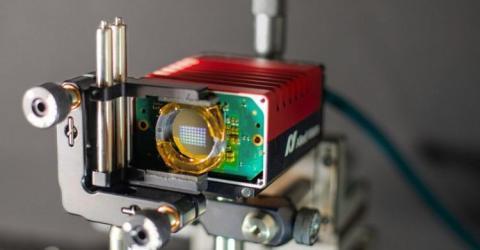
Camera That Identifies Objects at Light Speed with Ultra-Low Power Use Researchers at Princeton University, led by Felix Heide, and Arka Majumdar from the University of Washington, developed a camera that doesn’t just capture images but also identify them instantly. Resulting in 100x faster computation and drastically reducing the energy consumption. Researchers created a new type of compact camera designed specifically for computer vision. Unlike… |

|
Robot with Shape Shifting Design That Rolls, Moves, and Swims Across Any Terrain Robots usually struggle with challenging terrains and may need an extensive amount of sensors to navigate through tough environments. GOAT developed by researchers at EPFL’s CREATE Lab can change its shape, letting it drive, roll, and even swim while using less energy. Unlike most robots, which only calculate the shortest path, GOAT takes into account how and in what shape to move… |
|
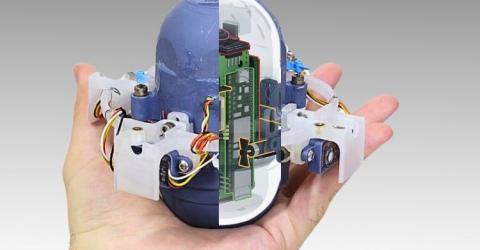
CARL: An Underwater Robot That Surfs Vortex Rings for Energy-Efficient Propulsion CARL is an autonomous underwater vehicle designed by researchers Peter Gunnarson and John O. Dabiri, this robot uses vortex rings, the spinning pockets of water, to move efficiently, reducing energy use by nearly 80%. Instead of constantly using its motors, CARL detects and rides these natural flows. CARL is equipped with an inertial measurement unit (IMU), a sensor that detects motion… |
|
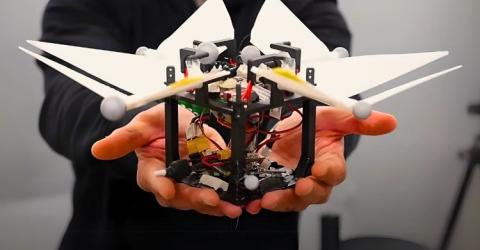
Floaty: A Skydiver Robot That Flies in a Wind Tunnel While a skydriver falls from the sky or when a starship adjusts its position, they use air resistance to steer. This mechanism is used by this Floaty, a skydiver Robot made by Youtuber and researcher as a part of his PhD research which flies in a wind tunnel. Floaty has flaps that tilt and adjust the air dynamics while floating, like how a skydriver spreads or tucks their arms and legs… |
|
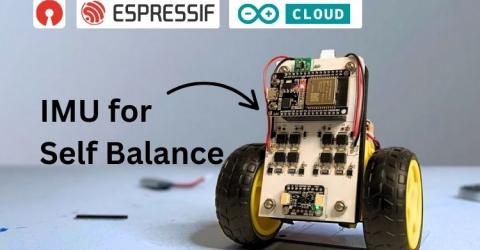
An Open-Source Self-Balancing Robot Powered by ESP32 A developer has built a self-balancing robot featuring a custom motor control system powered by an ESP32 microcontroller. The system integrates an H-Bridge circuit with MOSFETs for efficient motor operation, allowing precise bidirectional movement and smooth speed adjustments through Pulse Width… |
|
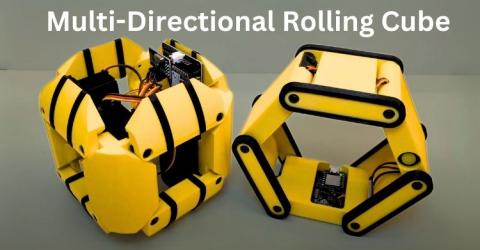
DIY Multi-Directional Rolling Cube Robot with Self-Righting Design Robots come in many forms, but some can move in all directions just by adjusting their shape. Joshua Stanley, a creator on YouTube, has previously created Fred, a rolling robot with a hexagonal folding design. The creator took a different path this time and made improvements, hence the birth of Marc, a new multi-directional rolling cube. The older version is much more complex, so he… |
|
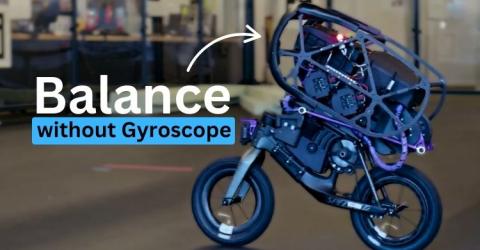
Advancing Robot Bikes with Reinforcement Learning The Robotics and AI (RAI) Institute has developed the Ultra Mobility Vehicle (UMV), a self-balancing robotic bike capable of navigating challenging terrain and even jumping onto high surfaces. Reinforcement learning (RL) is playing a key role in helping robots adapt to complex situations and perform better. Unlike traditional… |
|
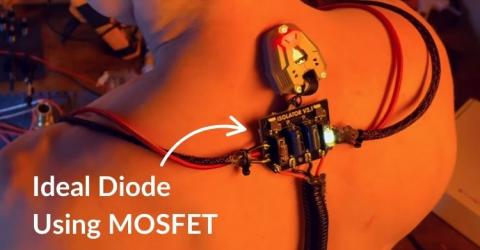
Hybrid Power Management System with Ideal Diode Technology A YouTuber has developed a combat suit featuring a spinal battery system designed for improved power efficiency and reliability. The system includes voltage regulation, overcurrent protection, and cell isolation to prevent damage from physical impacts. The suit incorporates an "ideal diode" circuit using MOSFET-based switching… |
|
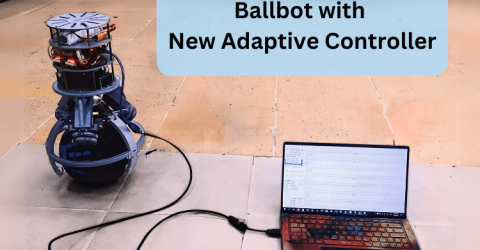
Making Ballbots More Stable with New Adaptive Nonlinear PID Controller System Ballbots are a fascinating type of robot that can move in any direction, but controlling them is no easy task. Traditional controllers, like PID (Proportional-Integral-Derivative), struggle to handle these balancing issues, while more advanced methods can cause instability and excessive movements. A team of researchers, led by Dr. Van-Truong Nguyen from Hanoi University of Industry,… |

|
Clone Robotics Unveils Protoclone, A Milestone in Musculoskeletal Android Technology Clone Robotics, a company operating in the United States and Poland has introduced its latest innovation Protoclone V1, a bipedal musculoskeletal android. This prototype is designed as a synthetic human that replicates key aspects of human anatomy with precision. The design incorporates a faceless structure and is built to simulate human movement through advanced… |