
community news

|
AI-Powered RC Car Explores Winter Wilderness Autonomously YouTuber Coding with Lewis recently demonstrated how an AI model can be given a physical body by converting an RC car into a fully autonomous wilderness explorer. Using Claude 3.5 Opus as the decision-making engine and a Raspberry Pi 5 as the onboard controller, the project bridges digital intelligence with real-world robotics, allowing the vehicle to navigate snowy forest terrain completely… |
|
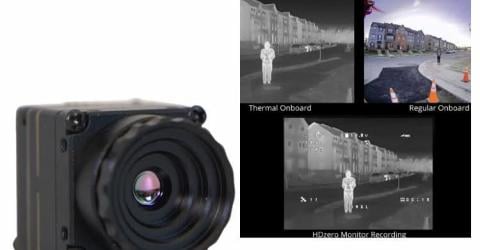
DIY Thermal Drone Demonstrates Heat Vision on Low-Cost Thermal imaging drones are no longer limited to military or industrial use. A YouTuber named Hoarder Sam demonstrates how a thermal drone can be built at a relatively low cost, opening the door for hobbyists, students, and innovators to explore heat-based vision technology. The project highlights how modern sensors and compact electronics are making advanced imaging tools more accessible than… |
|
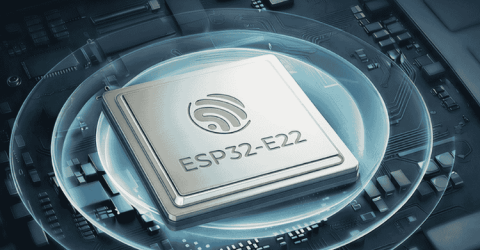
Espressif Introduces ESP32-E22, Its First Wi-Fi 6E Connectivity Co-Processor Espressif has unveiled the ESP32-E22, the company’s first Wi-Fi 6E system-on-chip and the start of a new lineup focused on high-performance wireless connectivity. Designed as a radio co-processor (RCP), the device handles Wi-Fi and Bluetooth tasks independently, allowing the main host processor to concentrate on application logic rather than networking overhead. The… |
|
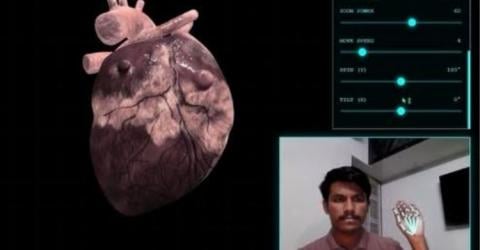
Student Builds Touchless Hand-Gesture Interface for Sterile Surgical Control A biomedical engineering student, Sudarshan VasanthaKumar, has developed a vision-based, touchless gesture interface designed for use in sterile medical environments. The system allows surgeons to rotate, zoom, and inspect 3D medical models without touching a mouse, keyboard, or screen, addressing a challenge in operating rooms where sterility is critical. The project, called Bio-Vision… |
|
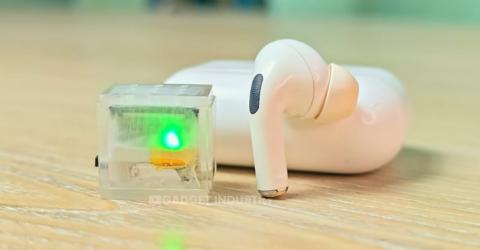
A DIY Bluetooth Speaker That is Smaller Than an Earbud Shrinking consumer electronics to their practical limits is a recurring theme in the DIY hardware space, and a recent project from the YouTube channel Gadget Industry takes that idea to an impressive extreme. The build centers on a Bluetooth speaker so small it undercuts the size of a single AirPods earbud, yet still manages to function like a conventional portable speaker. At the core of the… |

|
Deskimon The Interactive 3D Printed Desk Robot with ESP32 S3 Nowadays, many people enjoy keeping a small desk robot in their workspace. These little companions not only add a playful touch to the desk but also help bring out the inner child and provide a brief escape from daily stress. Among the latest additions to this trend is the Deskimon, a compact and creative 3D-printed desk robot. Unlike other desk robots that require separate components for the… |
|
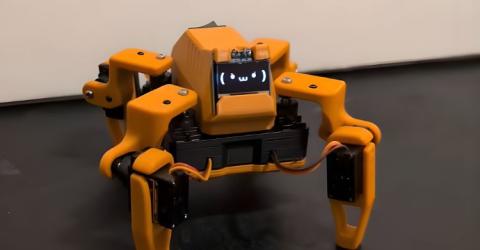
Sesame Robot: Open-Source Quadruped for Every Maker A new open-source quadruped robot called Sesame Robot is making legged robotics more affordable and accessible. Developed by Dorian Todd, Sesame is built using an ESP32 microcontroller, 3D-printed parts, and eight low-cost servos, keeping the total build cost around $50–60. With complete CAD files, firmware, and detailed assembly guides available on GitHub, users can easily build, customize,… |
|
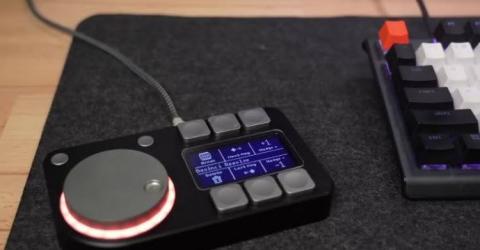
A Smart Macro Pad with Haptic Feedback Ever thought of controlling your computer using buttons and a knob that actually feel different when you use them? Most input devices, like keyboards and mice, only give visual feedback on the screen and do not provide any physical sensation to indicate how an action feels. The Macropad changes this experience by adding the sense of touch to everyday computer controls. This is a six-button… |
|
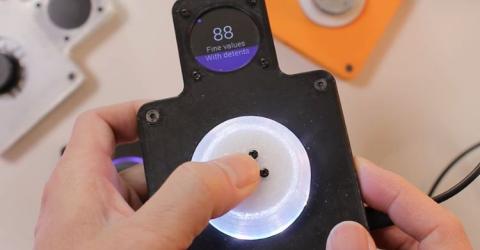
ESP32 Makes SmartKnob Simpler and Smarter This is a simpler, more beginner friendly version of the original SmartKnob designed to make smart haptic controls easier to build and understand. By removing much of the complexity found in earlier designs, this version is easier to assemble and supports more motor options, making it an approachable project for hobbyists and first time builders alike. Kokensha Tech redesigned the… |

|
DIY “Mo-chan” Desk Robot Attracts Maker Community Attention A small do-it-yourself desk robot named Mo-chan has been shared with makers, demonstrating how individuals can build simple robotics and electronics projects on their own. This project uses an ESP32-C3 microcontroller, small DC motors, an OLED screen, and a motor driver to create a robot that looks nice and functions well as a companion for a desk. The robot is constructed using a metal… |
|
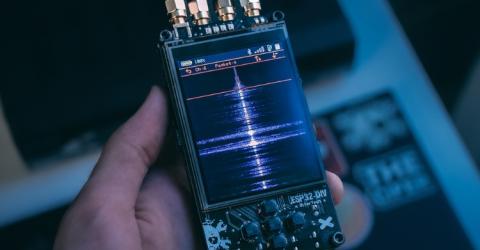
Meet the ESP32-DIV V2: The Open-Source "Flipper Zero Killer?" If you've been following the world of portable pentesting tools, you know the Flipper Zero reigns supreme. But for the makers among us who prefer "built not bought," a serious contender has arrived. Creator CiferTech has just released the ESP32-DIV V2, a completely open-source, multi-band wireless testing toolkit that aims to be a more accessible and customizable alternative to commercial… |
|
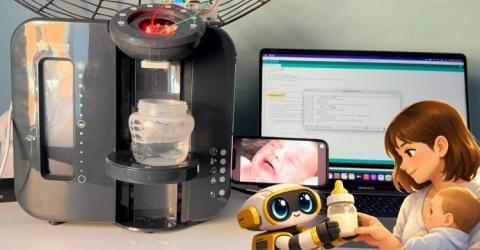
An Embedded AI Project Aimed at Easing Night-Time Baby Feeding Late-night infant care often leaves little room for precise or repeatable routines, which makes even simple tasks feel demanding. Addressing this reality, Manivannan has created a DIY edge-AI system that automatically starts a bottle preparation machine when a baby’s cry is detected. The project, shared through his YouTube channel MakeTinyML, focuses on augmenting an existing appliance rather… |
