

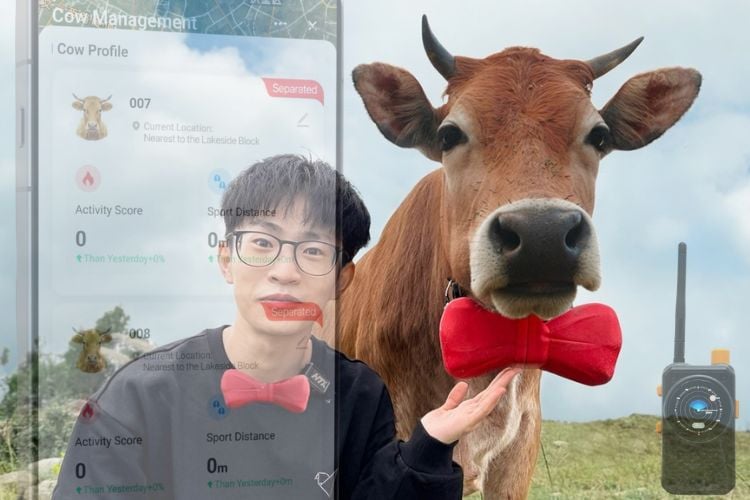
A development team recently built a custom long-range livestock tracking system designed specifically for farms located in mountainous regions with poor cellular coverage. Instead of relying on standard GPS trackers that require 4G connectivity, the project uses a private LoRa-based communication network to help farmers monitor cattle positions in real time. The complete setup consists of rugged cow-mounted trackers, relay stations, a central gateway, a dedicated handheld communication unit, and a companion mobile application.
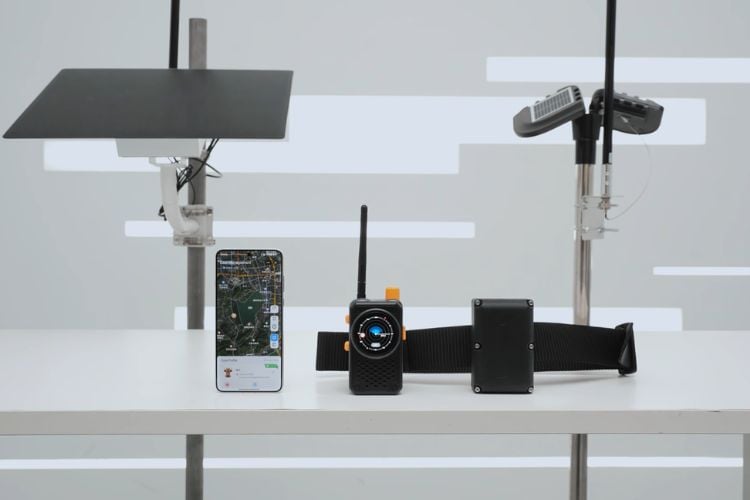
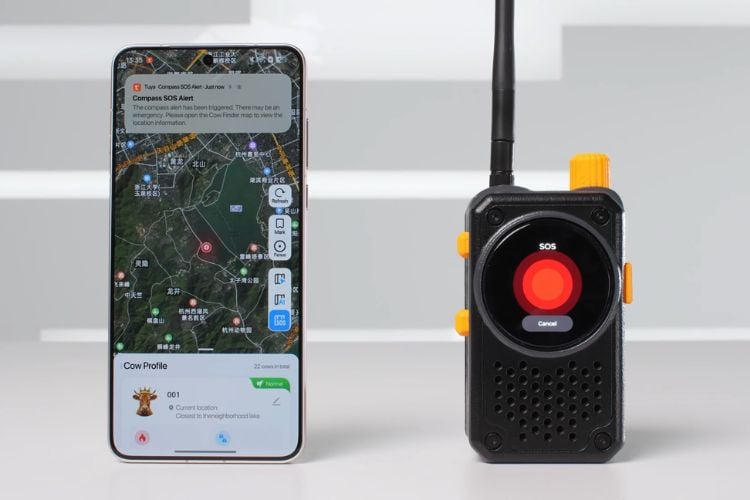
The most interesting part of the project is the custom handheld device, which functions like a walkie-talkie and allows the farmer to access location data even without mobile service. The trackers communicate over LoRa to relay stations positioned across the terrain, which then forward data to a gateway and server infrastructure. Each tracker also integrates an accelerometer to monitor movement and detect abnormal conditions such as falls or potential accidents. The handheld interface further includes a voice-query system where users can ask for the location of a specific cow and receive spoken coordinate information.
From an engineering standpoint, the project addresses a practical infrastructure problem rather than focusing purely on consumer IoT convenience. The shift away from cellular dependency is particularly relevant for remote agricultural deployments where terrain blocks conventional communication networks. The team also iterated on enclosure design for durability and field usability after finding some earlier concepts impractical in real-world conditions. Overall, the project demonstrates how low-power long-range communication can be adapted into reliable rural monitoring systems without depending on existing telecom infrastructure.

Add a comment
No account needed. Your comment appears once a moderator has reviewed it.