


A recent project showcases Reticulum, a cryptography-based networking stack designed to build a decentralized, infrastructure-independent communication network. Unlike traditional mesh systems that depend on specific radios sharing the same frequency, Reticulum abstracts hardware into interchangeable “interfaces.” Whether the link is LoRa, Wi-Fi, Ethernet, or packet radio, the protocol operates above the physical layer, enabling secure communication across completely different transport mediums without relying on ISPs, cellular towers, or centralized routing.
To demonstrate this capability, the creator built custom RNodes using T-Beam LoRa boards, OLED displays, NeoPixels, and high-gain antennas housed in 3D-printed enclosures. In a three-node experiment, one device operated exclusively over LoRa (915 MHz), another solely over Wi-Fi, and a third functioned as a bridge containing both interfaces. Reticulum successfully routed encrypted messages between the otherwise incompatible LoRa-only and Wi-Fi-only devices, proving that the network layer remains independent of the underlying radio technology.
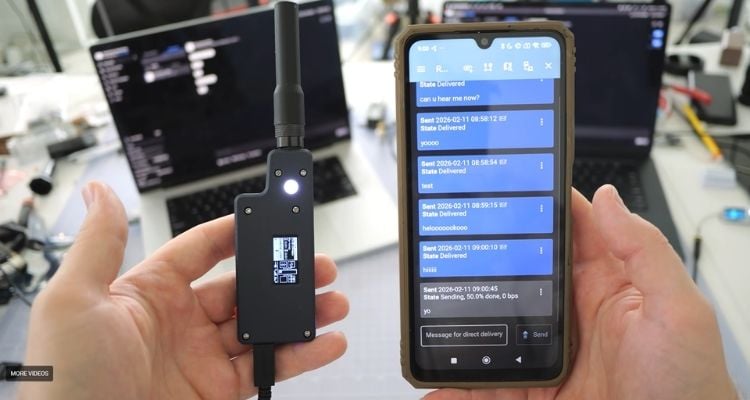
The experiment expanded further by deploying Reticulum on Raspberry Pi-based “Haven nodes” equipped with Wi-Fi HaLow (802.11ah) cards operating around 900 MHz for extended range. Over this encrypted mesh, the creator ran ATAK (Android Team Awareness Kit), demonstrating real-time mapping and chat despite Reticulum’s constrained packet size. By fragmenting and compressing traffic, the system supported tactical data exchange over long-range wireless links. The project ultimately highlights Reticulum’s vision of a “sovereign” parallel internet, cryptographically secure, hardware-agnostic, and fully user-controlled.

Add a comment
No account needed. Your comment appears once a moderator has reviewed it.