
 Vedhathiri
Author
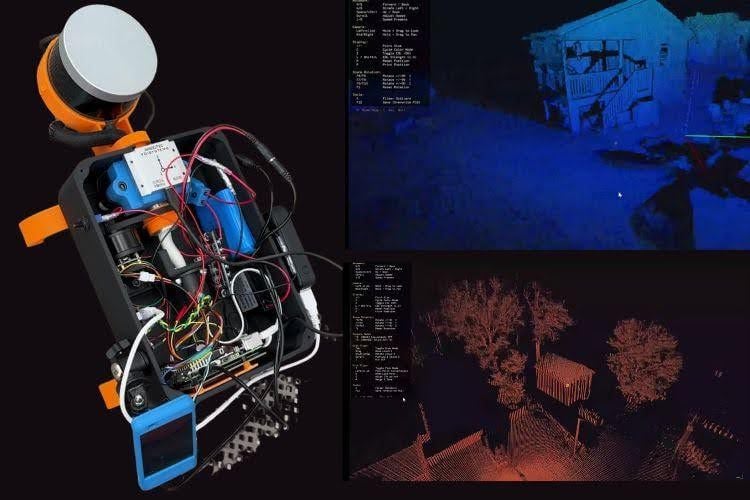
A YouTube channel named 9nl has developed an open-source project on GitHub that is gaining attention for its approach to 3D reconstruction using point cloud data. The system combines both hardware and software elements, where a compact embedded platform such as the Raspberry Pi can be used for capturing spatial data through connected sensors like cameras or LiDAR. This data, consisting of thousands to millions of points defined in a three-dimensional coordinate system (x, y, z), may also include additional attributes such as color (RGB) or intensity, forming the basis for reconstructing real-world environments digitally.
On the software side, the project focuses on processing and reconstructing the captured data into meaningful 3D models. The pipeline begins with preprocessing techniques such as voxel grid filtering and statistical outlier removal to reduce noise and improve data quality. It then applies algorithms for estimating spatial relationships and surface normals, enabling reconstruction methods like triangulation and surface meshing. The processed output is typically stored in standard formats such as PLY or OBJ, which can be visualized using tools like Open3D or MeshLab. Processing time varies depending on dataset size, resolution, and available computational resources, rather than following a fixed duration.
This hybrid approach highlights the growing importance of integrating embedded systems with advanced data processing techniques. Applications of such technology are seen in robotics, autonomous vehicles, and augmented reality, where accurate spatial mapping is essential. To enhance visualization, the final reconstructed data can be explored using a point cloud flythrough, allowing users to navigate through the 3D environment in an interactive manner. The creator has also indicated that this system could be used in the future to fully scan and map complex environments such as caves, demonstrating its potential for real-world exploration and analysis. By making the project open-source, developers and researchers are encouraged to experiment, enhance performance, and adapt the system for practical applications, contributing to ongoing advancements in 3D reconstruction and intelligent system design.