

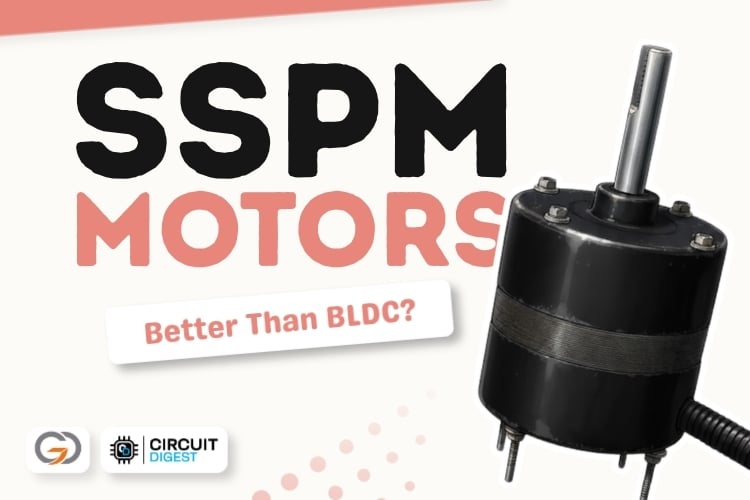
As I sit down to write this piece, I notice the fan whirring above and, for the first time, it occurs to me that it runs on an induction motor. So does every other fan in my office and my home. These motors have been around for a long time, not because they’re the best options out there, but because they’re cheap and do the job. BLDC motors have gained a bit of popularity, but are pricier and usually come with an import dependency problem. Yes…those neodymium magnets aren’t that attractive. We explored what might just be the solution to this problem with Suyash Mishra, Founder & CEO of Gati Drives.
Stronger Magnet’s a Weakness?
Usually, a good chunk of a BLDC motor’s cost goes towards a REPM (rare-earth permanent magnet), which is often neodymium-based. According to a release by the Press Information Bureau, the supply chain of these magnets is heavily concentrated in China, which supplies about 90% of India’s demand. Now, what makes this even harder to ignore is that by 2030, India’s consumption of REPMs is expected to grow twofold. The country’s rare earth resource pool is by no means scarce, but the production capability unfortunately is. While the government stresses nurturing this nascent industry, there’s a startup doing it the other way around, trying to eliminate the dependency in its truest sense by making efficient motors that can do without rare-earth magnets.
SSPM Motors, Nothing Rare
The ‘slip’ in Slip Synchronous Permanent Magnet (SSPM) does not refer to slip in the conventional induction motor sense, but more about that later. To start, let’s briefly touch on how a BLDC motor works, as it makes understanding SSPM motors a whole lot easier. At a high level, a BLDC motor uses a controller to excite stator windings in a way that creates a rotating magnetic field, with which the rotor’s permanent magnets remain synchronized. The three-phase topology it uses inherently avoids dead spots. SSPM motors, on the other hand, use a single-phase topology and sidestep null torque regions through their novel stator geometry. This unique geometry is what accounts for the “slip” in the name. Built around ferrite magnets, the motor compensates for the weaker pull with a design that Suyash claims achieves the highest copper utilization for torque production in the market. Also, the motor runs on a distinct type of controller that the company developed entirely in-house.
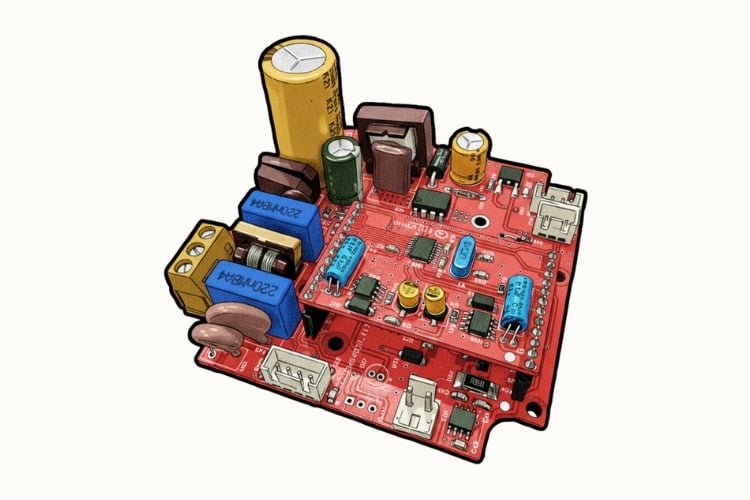
According to the company's website, SSPM motors achieve a 93% energy conversion rate, against BLDCs’ 90%.
Status Quo
“We are currently at that litmus test stage where market will tell us how good our motor is,” is how Suyash described where Gati Drives currently stands. The company has a factory set up in Ahmedabad, where it expects a production capacity of roughly 5,000 motors a month. At present, motors with power ratings up to 200 W have been developed, aimed at the appliance sector; however, industrial applications are waiting in the wings for the technology to mature.
Beyond Credentials
Suyash’s lived experience runs counter to the common perception that meaningful innovation only comes from blue-chip credentials. He noted how when he started working with motors, neither he, his friends, nor anyone alongside came from what are considered the elite engineering institutions or held advanced degrees. “We have that stigma and the mentality that innovation cannot happen unless and until you have a great degree, right? Either you should be an IITian, or you should be having PhD,” he said. “And during the course of like last 2-3 years, we realized that if you put, you know, good effort with a very focused mindset, I think innovation can be possible.” A similar angle appears in his advice to aspiring engineers as well. He recommends landing jobs or internships at startups, where “you have the greatest potential to learn,” which implicitly contrasts with chasing a big name or title.