
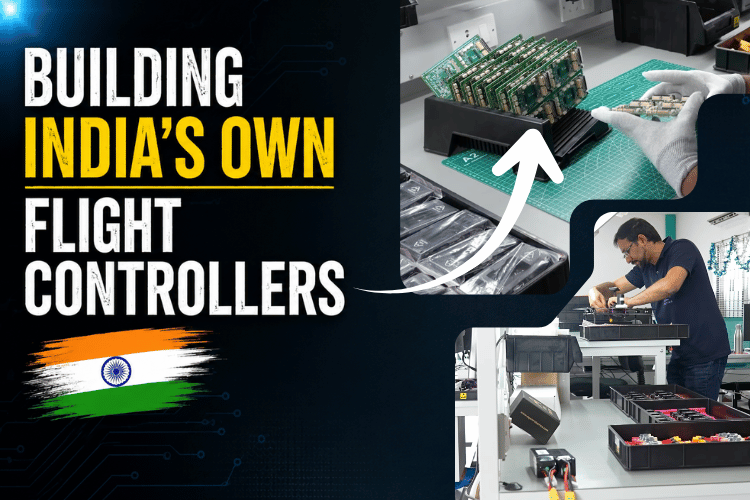
Agam Robotics is a startup based in Bangalore that builds drone components, including flight controllers, GNSS modules, optical flow sensors, rangefinders, power distribution boards, and power modules. The company's stated focus is on building products from the bottom up within India, with PCB fabrication, assembly, enclosures, plastics, and aluminium heat-sink components all done in India. Electronic components such as semiconductors are imported, as the founders acknowledge that chip manufacturing in India is currently non-existent at the startup scale.
This feature is part of our India Tech Tour series, presented in collaboration with DigiKey, a leading global distributor of electronic components serving engineers and innovators across 180+ countries with a catalog of over 18 million products from 3,000+ suppliers.
The company's website carries the tagline "hardware made with blood, sweat, tears and imported ICs." According to Karthik Rangarajan, founder and CEO/CTO, this phrase is meant to emphasize the depth of indigenous building covering everything from PCB fabrication and assembly to enclosures while acknowledging the necessity of importing electronic components due to the absence of a domestic semiconductor industry.
Product Portfolio
Agam Robotics' product line, as described in the interview, includes:
- Agam Autopilot the flagship flight controller product
- GNSS01 and GNSS02 GPS/GNSS modules
- FloRange Sensor an optical flow and rangefinder integrated into a single unit
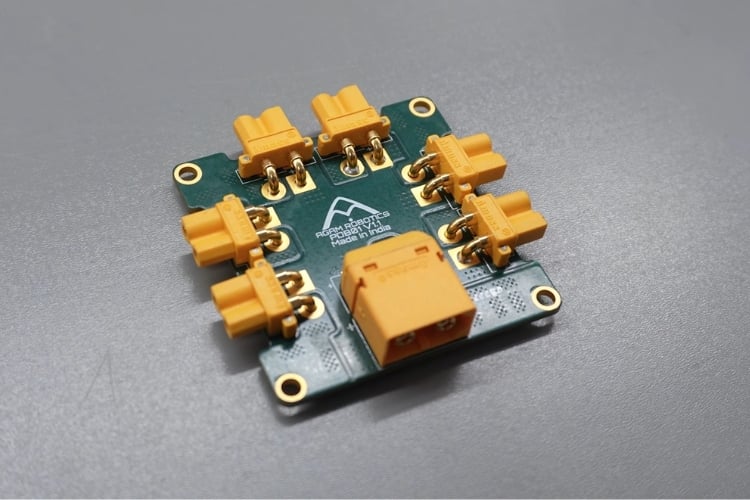
- Power distribution boards and power modules currently rated up to 150–200 amps, with higher current versions in development for larger drones such as agriculture drones that require 400–500 amps
Products are listed on the company website only after internal testing. At the time of the interview, the SKU count had grown from one flagship product to approximately 10 products across different verticals and horizontal variations. Additional products across power module and GNSS categories were described as being in development but not yet released.
The company categorizes its development work both vertically (new product categories such as autopilots, GNSS, sensors, power systems) and horizontally (multiple variants within each category to serve different drone sizes and use cases).
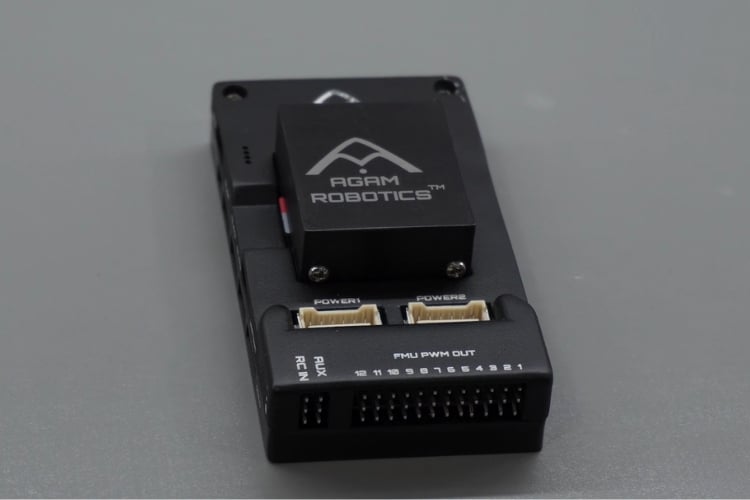
Flagship Product: Agam Autopilot V6X-RT
Flight Controller vs. Autopilot
Karthik distinguished between flight controllers and autopilots as follows: an autopilot handles autonomous flight pre-planned paths, specific heights and speeds by integrating sensors and companion computers. It receives sensor data, processes it, and issues commands to motors and other systems. A flight controller, by contrast, is associated with manual or acrobatic control, where a pilot retains control throughout. The distinction, he noted, is partly determined by the firmware in use, and the two terms are often used interchangeably in the industry.
Hardware Architecture
The Agam Autopilot V6X-RT is based on the FMUv6X-RT open system standard. Karthik stated that the V6X-RT standard itself was created in collaboration with NXP, with Agam Robotics serving as an ecosystem partner in its development.
The processor used is the NXP IMX-RT1176, a dual-core chip with one core running at 1 GHz and the other at 400 MHz. Karthik contrasted this with STM32-based flight controllers used in earlier Pixhawk standards (V5, V5X, V6, V6X), which are single-core at 480 MHz.
One specific advantage of the NXP chip, according to Karthik, is that it eliminates the need for a secondary microcontroller that STM32-based designs require to expand I/O. In STM32-based designs, a secondary MCU handles additional I/O devices, requiring two separate firmwares and additional hardware. The NXP chip's higher I/O pin count allows all functionality to be consolidated into a single chip with a single firmware.
As a result of this architecture, Karthik stated that the Agam Autopilot V6X-RT includes more ports than any other autopilot or flight controller in the market at the time, including a third CAN port (CAN-3) that he described as non-existent in any other product before Agam Robotics developed it in collaboration with NXP. The board follows the Pixhawk standard connectors, including 50-pin and 100-pin connectors, and is described as a fully connectorized, solderless design.
The PCBs used in the autopilot are 10-layer and 6-layer boards. Enclosures include plastics and aluminum CNC-machined components, all done in India. Karthik attributed the product's cost partly to this domestic production process rather than solely to the chip choice.
Firmware
The Agam Autopilot V6X-RT supports PX4, an open-source firmware under BSD licensing, which permits users to add proprietary features and commercialize the result. Karthik described Pixhawk as an "open system" design meaning it defines which microcontrollers and pinouts are compatible with the firmware, without making hardware schematics open source. Agam Robotics, in partnership with NXP, developed a new pinout for the NXP imxRT chip within this framework.
Security Features
A secure element chip has been integrated into the hardware. Karthik described this as hardware-level security (not firmware-level), designed to prevent unauthorized reading of data even under physical tampering access requires a private key. Logs are stored encrypted. He cited drone hacking incidents involving Indian defense drones as the motivation for this feature, noting that drones connected to the internet are potentially accessible remotely. The secure element provides the hardware infrastructure for users to build security features into their systems; Karthik stated that the company was working with developers to add further functionality on top of this.
Ecosystem: Supporting Modules
Agam Robotics also builds GNSS modules and the FloRange Sensor (combining optical flow and rangefinding). Karthik explained that the ecosystem was developed because off-the-shelf third-party components used alongside the autopilot frequently caused compatibility issues including firmware version mismatches and components that claimed PX4 support but did not fully deliver it. After repeated troubleshooting cycles with customers, the company decided to build its own compatible peripherals.
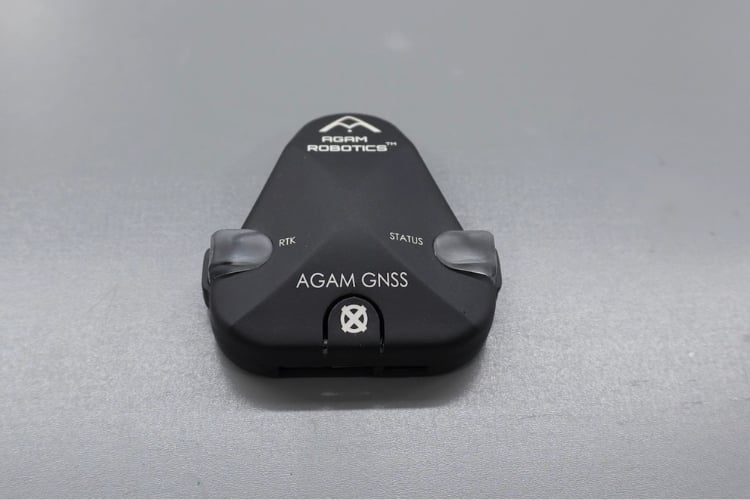
The modules are designed to work with the Agam Autopilot but are also compatible with other flight controllers and firmwares. Karthik described the hardware as modular and not restricted to their own ecosystem.
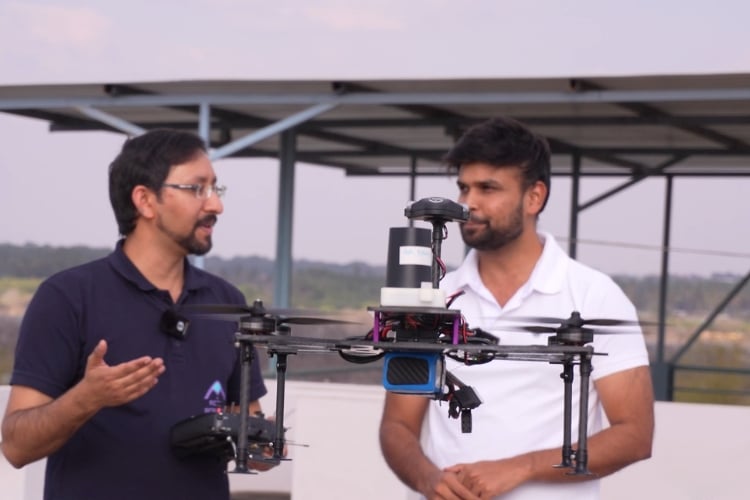
In a flight demonstration shown during the interview, the drone held position using optical flow sensor data at low altitude (below approximately 70–80 meters), with GPS intended to take over position holding at higher altitudes.
Design and Production Process
Design work is carried out internally at the Agam Robotics facility in Bangalore, including product layout planning and enclosure design. Production is outsourced but, as of the time of the interview, consolidated within Bangalore to simplify logistics and allow rapid modifications.
Karthik described the product development cycle as ranging from a few months to approximately one year, depending on the product. The stages include ideation, design validation, prototyping, procurement, PCB production, pilot lot testing, and then scaling up. He described each stage as having distinct challenges.
A common constraint mentioned was component lead times, with some components taking 20–30 weeks to procure. The company uses DigiKey for prototype-stage component procurement, receiving parts within approximately 10–15 days in most cases. Some components must be sourced directly from manufacturers when DigiKey stock is unavailable.
Prototyping runs are typically small batches (5–10 units). If changes required after prototyping are minor, the company proceeds directly to scaled production; if the changes are significant, another prototype iteration is conducted. Scaled production introduces its own issues, including yield problems and enclosure fitment defects, which Karthik described as adding cost, money, and time.
Business and Market
Early History
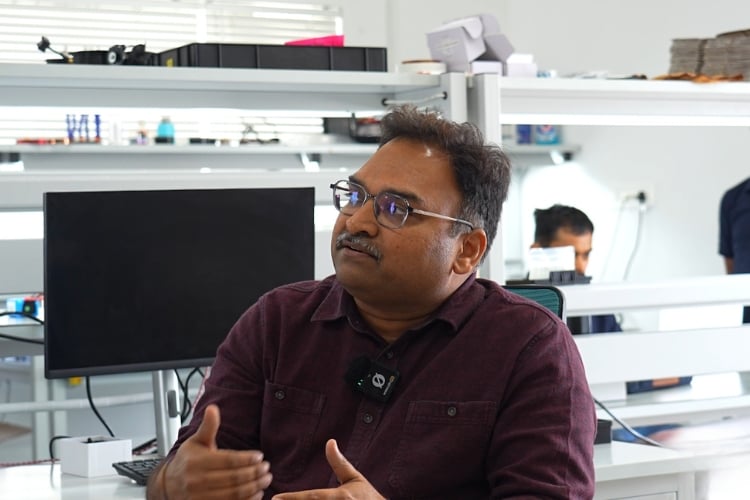
Karthik began working on autopilots around 2020. Co-founder Kapil Aare, who joined approximately two years before the interview as co-founder and head of operations, stated that early operations began in "garage mode" at Karthik's home. The company moved to an office in 2025, built a team, scaled inventory, and increased investment.
Market Analysis
Kapil described the decision to focus on drone components rather than complete drones as coming from research into what the market needed. He identified demand from defense, agriculture, surveillance, cleaning, maintenance, and fire-fighting sectors, all of which require industrial-grade components. He noted that approximately 95% of the global drone components market is occupied by Chinese products.
Sales and Distribution
Sales are described as "organic in nature." The company was selling direct-to-customer through its website at the time of the interview and was in the process of building relationships with Indian distributors and e-commerce platforms to sell drone and electronic components. The stated plan was to approach distributors once sufficient inventory was established. Bulk pricing is offered to B2B customers.
Competitive Positioning and Pricing
Kapil stated directly that Agam Robotics cannot match Chinese product prices at current volumes. He attributed this to the cost structure of low-volume domestic production PCB fabrication, assembly, and imported components all carry higher per-unit costs at small scales. He said that capital investment and volume scaling would be necessary for costs to come down, with the company passing cost reductions on to customers.
He identified defense as a sector where price is secondary to quality and self-reliance, and described agriculture as a price-sensitive market where competing with Chinese pricing is more difficult. Other sectors were described as shifting toward reliability and service considerations.
Warranty was initially six months for all products. At the time of the interview, this was being increased to one year, with annual maintenance support for B2B bulk customers planned.
Export Regulations
Kapil stated that India does not present significant export challenges from the country side. He said challenges arise from the import regulations of the destination country. The US was mentioned as an example, specifically referencing FAA-related rules for GNSS products. He described the company as still learning those markets and noted that prototype/sample shipments face fewer regulatory hurdles than bulk B2B transactions.
Community and Industry Context
Karthik described the drone industry as having developed from the hobbyist community, with industrial applications emerging from hobby-originated platforms. He stated that drone-specific education is not formally available, and that most practitioners are self-taught through YouTube, forums, and community servers such as Discord. He said he personally began as a hobbyist in 2012.
He described hobbyist users of Agam Robotics products as being indirectly trained by the industrial-grade standards the company applies, preparing them for professional industry entry.

A well-written article. Choosing a trusted Heavy Duty Earth Pit Cover Manufacturer ensures better durability, UV resistance, and long-term safety for industrial installations.
Add a comment
No account needed. Your comment appears once a moderator has reviewed it.