
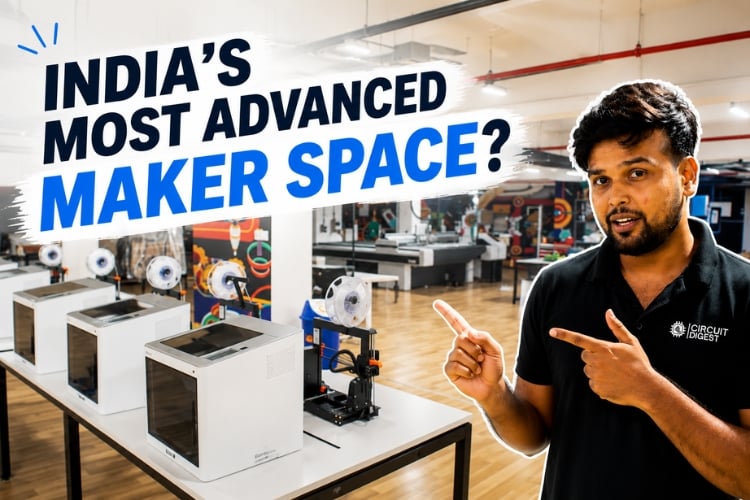
A fab lab, short for fabrication laboratory, is a digital fabrication workspace rather than a traditional hand-tool workshop. The concept originated at the MIT Center for Bits and Atoms, where professor Neil Gershenfeld conceptualized and scaled the idea into an entity called the Fab Foundation. Gershenfeld drew inspiration from a visit to Pabal, near Pune, where Dr. Kalbag was building a community maker space for local farmers and others who needed to make agricultural tools not available through conventional markets.
The idea began as a side project at MIT but proved popular with students because it offered a shared workspace instead of one scattered across departmental labs. Because many of the machines involved are complex and designed for industrial use, Gershenfeld introduced a class called "How to Make Almost Anything," which later evolved into the Fab Academy program. Fab Academy now runs across roughly 200 to 300 fab labs worldwide, and the broader fab network includes more than 2,000 labs globally.
Fab labs differ from generic maker spaces in their standardized digital fabrication infrastructure, which allows designs to be replicated across other fab labs without additional effort.
Kerala's Fab Lab and Super Fab Lab
Kerala's fab lab initiative began in 2016, during the state's early hardware startup boom. Two fab labs were set up that year, one in Trivandrum and one in Kochi, in response to the state's lack of large-scale manufacturing infrastructure and the growing need for prototyping capability among startups. Around 2018, the program was extended to 20 engineering colleges as "mini fab labs," and the network has since grown to around 24 fab labs across Kerala.
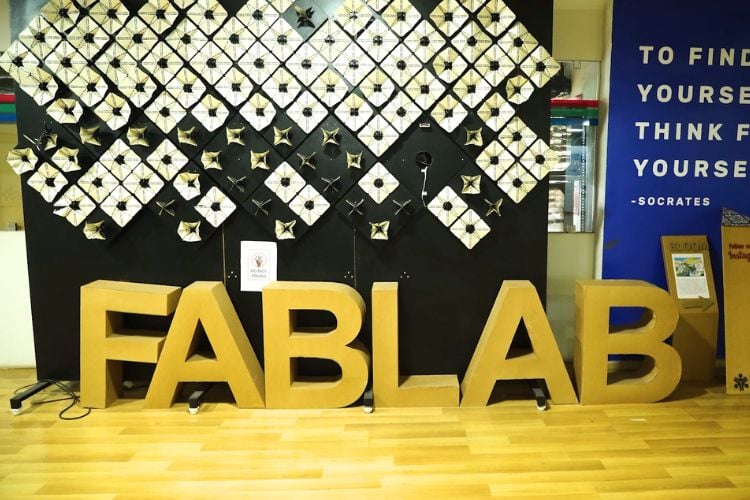
As startups began working on more complex deep tech products, the need for more sophisticated machine tools led to the creation of the Super Fab Lab, at the time the first super fab lab in the world outside MIT's Center for Bits and Atoms. MIT's experience supporting hardware companies, through tools and companies such as Formlabs and Shaper that originated from its ecosystem, helped Kerala's team select machines and set up the space. The cost of all the machines in the facility is estimated at roughly 1.5 million USD.
The relationship between fab labs and MSMEs (micro, small and medium enterprises) is complementary rather than competitive: the fab lab provides a production-ready prototype, which MSMEs can then work with directly.
Organizational Structure
Fab Lab Kerala operates under the Department of IT, with Kerala Startup Mission as the parent organization responsible for policy-level intervention in the state's startup landscape, including seed funds, angel investment and infrastructure support. Fab Lab Kerala is the department within Startup Mission focused specifically on hardware startups, alongside separate departments for software, SaaS and agricultural startups.
How People Use the Facility
There are multiple ways to use the lab. People can rent time on machines, request help from in-house designers to develop an idea into a design, bring their own completed designs for fabrication, or enroll in the Fab Academy program, a six-month intensive course in digital fabrication covering CAD design, electronics, embedded programming and rapid prototyping.
For someone bringing ready files, such as a Gerber file for a PCB, the lab has a portal where design files can be uploaded; this is integrated with the lab's CRM, and staff contact the person to discuss the design's compatibility with the lab's machines and workflows. Finished parts can be collected in person or couriered.
Startup Mission also supports funding applications and incubation. Startups can incubate either in Maker Village, a hardware-specific incubator, or in a software incubator if their product is software-based. Eligibility and incubation criteria vary by department and sector-specific program (medical, agritech, and so on), and are generally prioritized for startups based in or expanding into Kerala.
Pricing
The lab charges roughly 100 rupees per hour for 3D printing, irrespective of material, with no separate charge for materials used. Pricing can vary depending on whether the user is a student, a startup or a commercial or corporate entity, and the lab applies differential, subsidized pricing depending on the sector being supported.
Case Studies
Gen Robotics (Genrobotics) began as a program in the Fab Lab in Trivandrum, where the founders, fresh out of college, used the facility for early and production-ready prototypes before moving to their own facility.
E-Flabs, a company making medical monitoring equipment, used the lab's 3D printers for small-batch production runs rather than only prototyping.
Salton Systems, a company that fabricates pick-and-place machines, produced a custom batch of its equipment at the fab lab; one such pick-and-place machine is in use at the lab.
C-Electric, which makes a drive system for electric motors, used water jet cutting and other facilities to fabricate heat sinks, connectors and custom PCB testing jigs.
During the pandemic, a pharmaceutical company located in Alappuzha and producing paracetamol for the state approached the lab after a critical machine component was damaged and could not be imported due to supply chain restrictions. The lab 3D scanned the part, reconstructed it digitally, and printed a nylon replacement that lasted two to three weeks before being swapped out repeatedly until the original part arrived.
Reflections on India's Hardware Ecosystem
Skills and resources are not the main limitation for hardware innovation in India. People in India often underestimate their own capabilities, a pattern attributed to cultural and family factors rather than technical capacity. Resources are generally available except in highly specialized, deep scientific or research areas such as fusion or rocketry. Startup Mission's role is in part to provide a financial cushion for people attempting startups until they begin generating revenue.
Future Vision
The fab lab model is framed as more of a social movement than a standalone facility, drawing a comparison to Kerala's community library network. There is a stated goal for Kerala to become a "fab city" by 2050, a concept in which a city can produce much of what it needs locally and sustainably, while still sharing designs between cities for production in local, neighborhood fab labs. A related project called MTM is aimed at designing affordable, replicable and open fabrication machines that can be deployed in smaller community spaces, including a small desktop cutting machine costing around 115 USD intended for schools and neighborhoods.
Fab labs are also positioned as a possible "bridge" for people affected by AI-driven job displacement, offering an avenue to build something of their own rather than only employment.
Access Outside Kerala
The Fab Lab Kerala ecosystem welcomes users regardless of origin, having hosted students from the US and, more recently, from Gujarat. Restrictions apply specifically to which startups Startup Mission funds and incubates, since that program is state funded, but general fab lab access for making things is not restricted by location.
Additive Manufacturing: 3D Printing
Amaljith A M, Fablab Coordinator, guided us through the lab's 3D printing operations, which span several technologies.
FDM (fused deposition modeling) machines deposit filament layer by layer. The lab uses multiple FDM printers from different manufacturers for different tasks, including machines with five interchangeable nozzles for multi-material and multi-color printing, and machines from Bambu Lab dedicated to single-material printing in materials such as PETG.
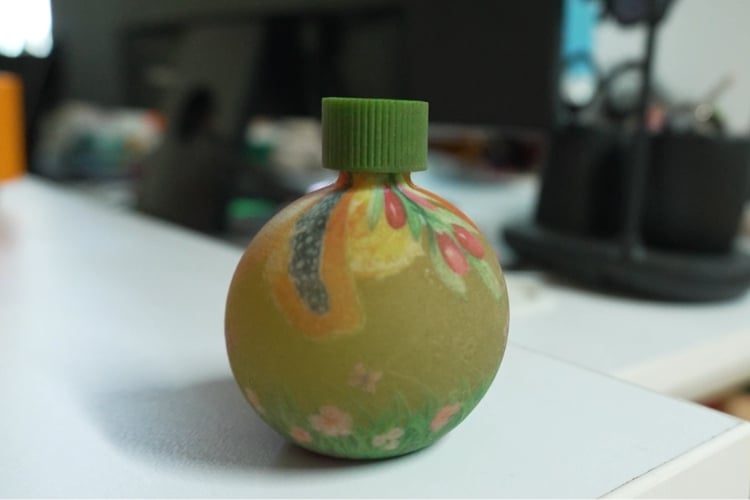
Resin printers are used when higher resolution or skin-friendlier materials are needed, such as for parts that may contact the human body. This is not true biomaterial but an engineering resin that is more skin-friendly than standard FDM plastic, and it is also used to capture finer detail than FDM's 0.4 mm nozzle allows.
PolyJet, an Israeli technology from Stratasys, is also resin-based but uses a gel-like support structure, allowing detailed multi-color prints close in appearance to a finished product. This technology has been used, for example, by the perfume industry to produce items for photo shoots without manufacturing the actual product.
SLS (selective laser sintering) uses a laser to sinter powder-format material, in a machine from Formlabs called Fuse. This enables intricate designs, such as certain drone parts, that cannot be produced on FDM or resin printers; functional tools demonstrated at the lab were printed in Nylon 12, a material specific to Formlabs equipment.
The lab also has a large-format FDM printer with a build volume of roughly 800 by 1 feet, used for items such as automotive parts.
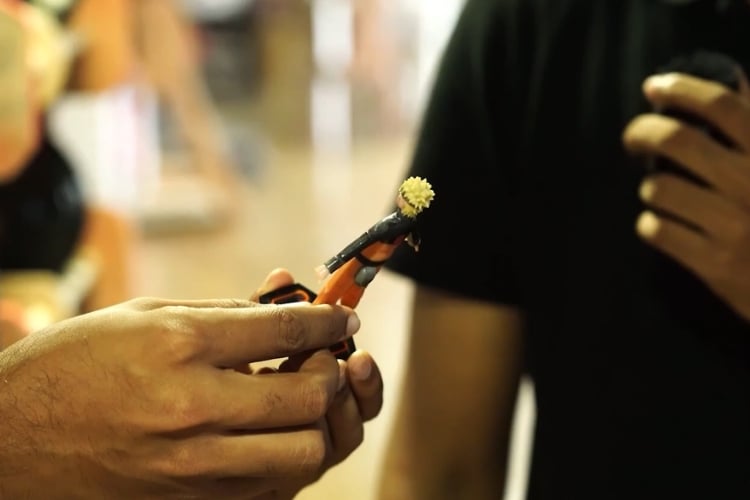
Several 3D printed items in the lab are internal design exercises, including furniture, board games and a PCB milling machine called Neo Pico, an open-source, mostly 3D-printed design built by the team itself.
Electronics and PCB Fabrication
Ashish Joy, Technology Fellow, took us through the electronics fabrication area, which mills PCBs in-house using a Carvera milling machine with automatic tool changing, rather than using industrial chemical etching. The machine can mill two-layer PCBs with traces and clearances down to about 0.4 mm. A separate laser machine, not dedicated to PCB work but repurposed for it, is used when tighter clearances are required, and can also produce solder stencils.
Soldering is done by hand for prototypes and via reflow oven for larger batches; a pick-and-place machine is used for runs of roughly 10 to 50 pieces. The team uses the open-source software KiCad, with an in-house pipeline to convert KiCad files into Gerber files and then into machine-ready files.
The lab also has testing equipment including digital oscilloscopes, microscopes and spectrum analyzers. Raw materials such as FR-1 and FR-4 board stock are kept in stock; FR-1 produces fewer fumes during milling. Customers are generally expected to bring their own electronic components, though the lab can source smaller quantities from its inventory.
One installation combining art and technology, involving multiple suspended balls each driven by a stepper motor node with an individual PCB and an AT-tiny microcontroller, coordinated by a central ESP32 board, was first prototyped at the lab before its PCBs were produced by an outside PCB house.
Subtractive Manufacturing
Mufeed Mohamed, Technical Officer, walked us through this section of the lab.
The water jet cutting machine has a bed size of about 4 feet by 4 feet and currently runs at around 40,000 PSI. It is used to cut composites such as carbon fiber, stone such as granite and marble, and metals including stainless steel, up to about 20 centimeters thick.
A CNC milling machine with a roughly 2-foot bed and 20 centimeters of height is used to mill stainless steel, composites and ABS plastic, including molds and parts for the lab's own machines. A CNC lathe, controlled by G-code, is used for parts such as small shafts for the lab's CNC machines.
A wire EDM machine from Mitsubishi offers around 5 micron precision, can cut materials up to 20 centimeters thick with a taper angle of about 20 degrees, and is used for cutting dies for punching and precise components for medical applications. It cuts conductive materials only; uncommon materials not held in the lab's stock, such as tungsten, must be supplied by the customer.
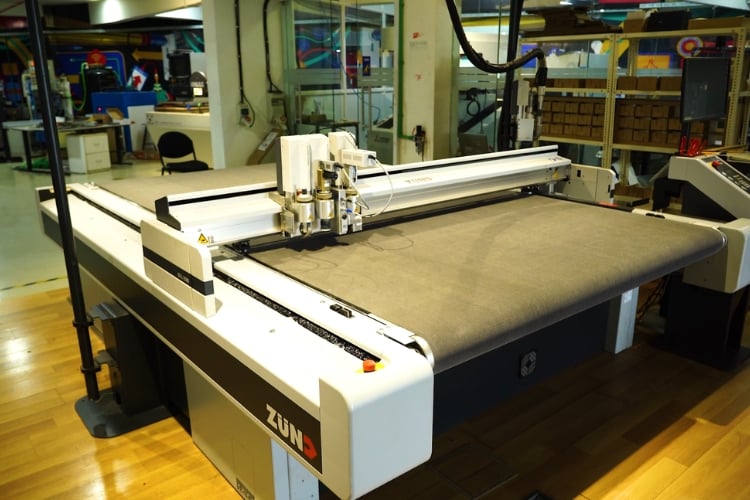
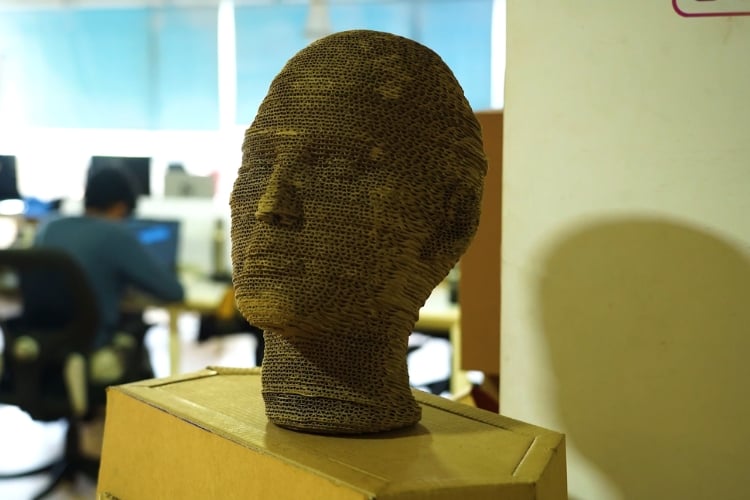
A flatbed digital cutter, capable of handling multiple processes such as cutting and creasing in a single pass, is used for cardboard, rubber sheets, leather, vegan leather, carpet and thin aluminum (2 to 3 mm), and has a router bit attachment for plywood, though wood and particle-heavy materials are not recommended due to mess. Its vacuum bed holds material in place without screws or glue, and a built-in camera allows it to compensate for misaligned material. Furniture in the lab, including a sofa designed by Jogin, was produced on this machine; the sofa was tested to hold around 150 kg, assembled without glue or staples, and can be cut and assembled in about 15 minutes, though the design process took one to two days.
Laser cutters in the facility include a unit from xTool with interchangeable heads (a 40-watt module, a 10-watt engraving module, an inkjet head, a pen-plotting head and a UV-printing-style module for acrylic), as well as a separate, larger laser cutter in another room. An air filtration system with five stages of filtration allows indoor use. One limitation is that the diode laser module used cannot cut clear acrylic.

Add a comment
No account needed. Your comment appears once a moderator has reviewed it.