
arduino

|
Human Following Robot Using Arduino and Ultrasonic SensorWorking of Human Following Robot Using Arduino
In recent years, robotics has witnessed significant advancements, enabling the creation of intelligent machines that can interact with the environment. One exciting application of robotics is the development of human-following robots. These robots can track and follow a person autonomously, making them useful in various… |

|
This 3D-Printed Robot Duck Learned to Walk With a Neural Network, and Now It Kicks a Ball Most small walking robots replay hand-tuned servo sequences. XGO-Duck, an open-source biped from Luwu Dynamics, the team behind the XGO robot dogs, walks on a neural network policy instead. The network runs on the Linux side of an Arduino UNO Q, while the board's STM32 microcontroller handles the 15 serial bus servos and the orientation feedback. This weekend the team posted a clip of the duck… |
|
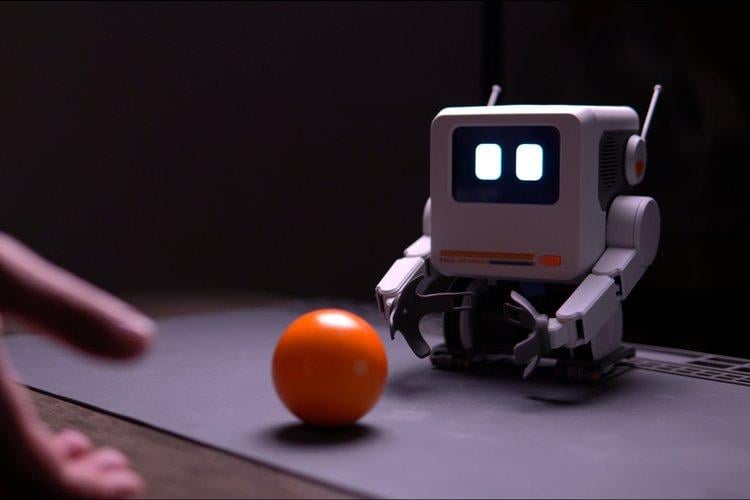
A $300 Robot That Plays Fetch: It Finds the Ball, Picks It Up and Brings It Back on Its Own Most hobby robots that "follow a ball" just chase a colour blob. Sector 07 built one that plays a full game of fetch. His 3D-printed robot, called Fetch, uses an Arduino UNO Q and a custom vision model trained in Edge Impulse to find an orange ball, drive to it, grab it with two arms, then look for the owner's hand and bring the ball back, with no remote control. It is his first autonomous… |
|
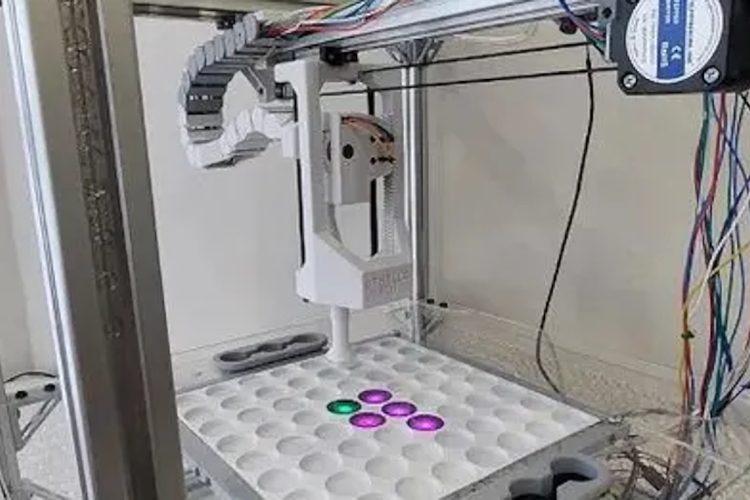
This Robot Plays Othello Without Flipping a Single Disc, Thanks to 64 Color-Changing LEDs In Grade 11, maker Jeneus tried to write an Othello program in C++. It ended up buggy and the computer could only play random moves. Years later, with mechatronics skills, he turned that failure into Othellobot: a gantry robot that watches the board with a camera, picks its move and places clear tokens with a suction cup. The smart part is that it never flips a disc. Every cell has its own LED… |

|
Pac-Man, Space Invaders and Manic Miner Run on a Plain Arduino Uno at 50 fps, With Two Resistors for Video and No Framebuffer An Arduino Uno has 2 KB of RAM, 32 KB of flash and a 16 MHz 8-bit ATmega328P. That is less memory than the 1982 ZX Spectrum had, and nowhere near enough to hold a frame of video. Even so, Smashcat has built a game engine that runs full arcade-style games on it at a locked 50 frames per second, straight to a TV over composite video made with just two resistors. It now runs four games: Manic… |

|
Arduino's 16 GB VENTUNO Q Runs a 744-Billion-Parameter AI Model From an SSD, and It Took 7 Minutes to Name Three Planets Large language models with hundreds of billions of parameters normally live in data centres, on servers with far more memory than any single-board computer. So it is a surprise to see one answer a question on an Arduino. In a project published on Arduino Project Hub, Jim Bruges ran GLM-5.3, a 744-billion-parameter model whose files take up about 419 GB, on an Arduino VENTUNO Q with just 16 GB… |
|
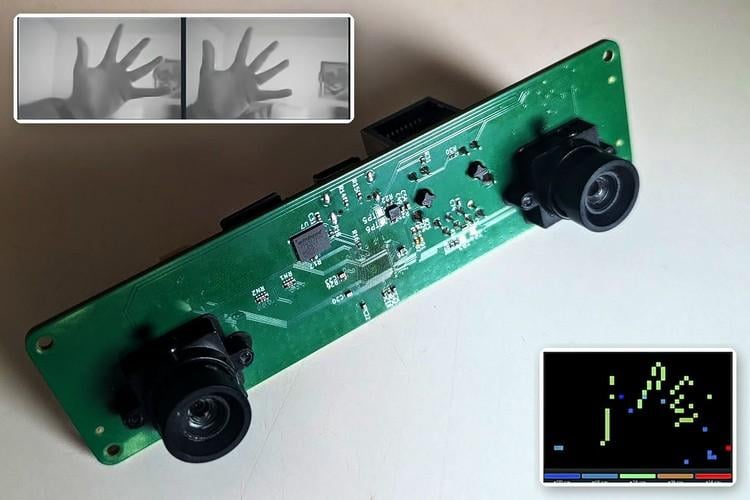
Two Eyes, One Tiny Chip: This Open-Source Board Computes Stereo Depth So Your Arduino Doesn't Have To Hardware hacker machinehum (Rootkit Labs) has built 4reel, a small open-source stereo vision board that gives robots depth perception without a Raspberry Pi or a PC riding along. Two OV9281 global-shutter cameras sit at either end of the PCB, and the depth maths runs on the board's own Rockchip RV1103 chip. Your Arduino or ESP32 just reads the results over UART. Powered by a single-core 1.1… |
|
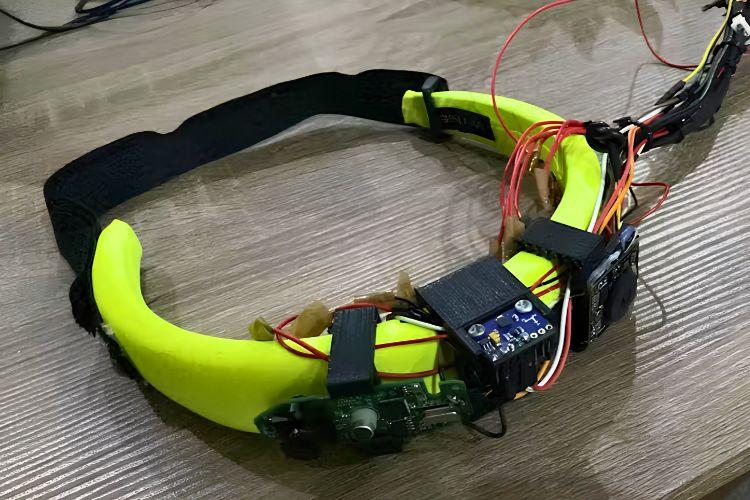
This Arduino UNO Q Headband Uses 13 Vibration Motors for Screen-Free Awareness Through Haptic Feedback Maker pasquale887 has developed HaloSense V1, a wearable haptic headband that helps users sense the direction of people and objects through vibrations instead of looking at a screen. The headband has 13 small vibration motors arranged around the forehead. When a person or target is detected in a particular direction, the motor in the corresponding position vibrates, helping the wearer… |
|
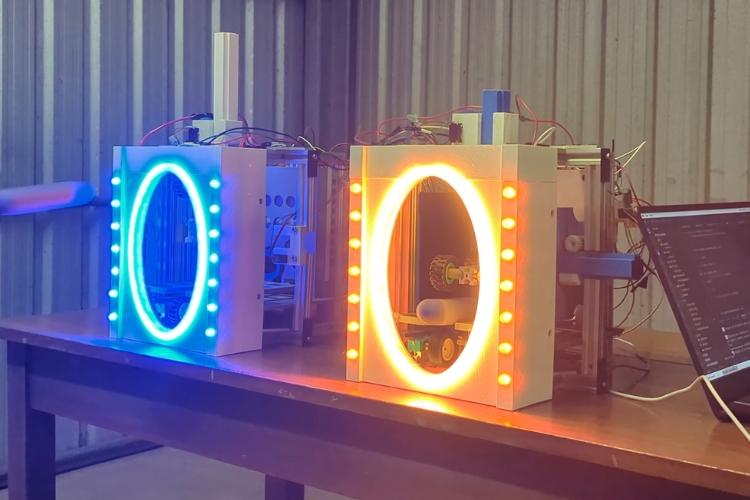
Maker Builds a Linked Portal Illusion Using Arduino Uno R4, Flywheel Launcher, and ToF Distance Sensors A maker from the youtube channel James' Programming has recently built a linked portal illusion using Arduino, 3D‑printed parts, and a custom aluminum frame. The setup uses two identical “portal” frames facing each other: when an object is thrown into one, it appears to instantly emerge from the other, creating a convincing real‑time portal illusion without any video tricks. … |

|
Arduino VENTUNO Q Opens Pre-Orders at $299 with Dual-Brain Architecture and 40-TOPS AI Arduino has opened pre-orders for the VENTUNO Q, a new edge-AI development platform built around Qualcomm’s Dragonwing IQ8 processor. The board is aimed at developers building robotics, computer vision, industrial automation and other systems where AI needs to interact with the physical world. According to Ankit Singh, Arduino’s India lead, the introductory pricing… |

|
Arduino Round Segment NeoPixel Clock Digital clocks are one of the most popular Arduino projects, and most of them use traditional seven-segment displays to show the time. While these displays are simple and reliable, they usually have the same familiar rectangular shape and monochrome appearance. When I decided to build a new digital clock for my room, I wanted to create something that worked like a seven-… |

|
DigiKey and Engineering Influencer Shawn Hymel to Host Webinar and Video Series on Reinforcement Learning with Balance Bots THIEF RIVER FALLS, Minn., USA — DigiKey, the global distribution leader of electronic components and automation products, is hosting a webinar with Shawn Hymel: “Train a balance bot with reinforcement learning,” scheduled for Thursday, Aug. 13, 2026, at 10 a.m. CDT. The free 90-minute virtual event will be a hands-on robotics and AI workshop that will teach attendees how to get started in the… |
